Iron Deficiency Isn’t Just Fatigue: The Signs You Might Be Missing
Last updated: June 2026
And why your "normal" labs might not be telling the full story
Iron deficiency doesn’t always look the way you expect it to.
Sure, we associate it with being tired. But it can also feel like brain fog that makes simple tasks take twice as long. Restless legs that keep you up at night. Hair shedding that has you cleaning your brush more often than usual. A racing heart when you’re walking up stairs that used to be easy. And yet, most women who bring these symptoms up to their doctor get the same response: “Your iron is fine.”
Here’s what doesn’t get said enough: the level of iron needed to avoid anemia is not the same level your brain, muscles, and metabolism need to function at their best.
Iron deficiency is the most common nutritional deficiency in the world. Women are especially at risk during certain seasons of life — heavy periods, pregnancy, breastfeeding, postpartum, and perimenopause all increase demand. And unfortunately, most conventional labs are designed to detect disease, not dysfunction. So you can feel awful while still being told everything looks “normal.”
Let’s walk through the less obvious signs that your iron might be running low, and what you can actually do about it.
What Iron Deficiency Feels Like in Real Life
Iron is essential to how your body moves, thinks, and repairs. It helps your red blood cells carry oxygen, yes, but it also fuels your mitochondria (those little energy generators inside your cells). Your brain uses it to make dopamine and insulate your nerves. Your muscles rely on it for endurance. Even your immune system and body temperature regulation depend on it.
So when your iron stores drop, your body starts making trade-offs. It rations what little it has, and symptoms show up in places most people wouldn’t associate with a nutrient deficiency.
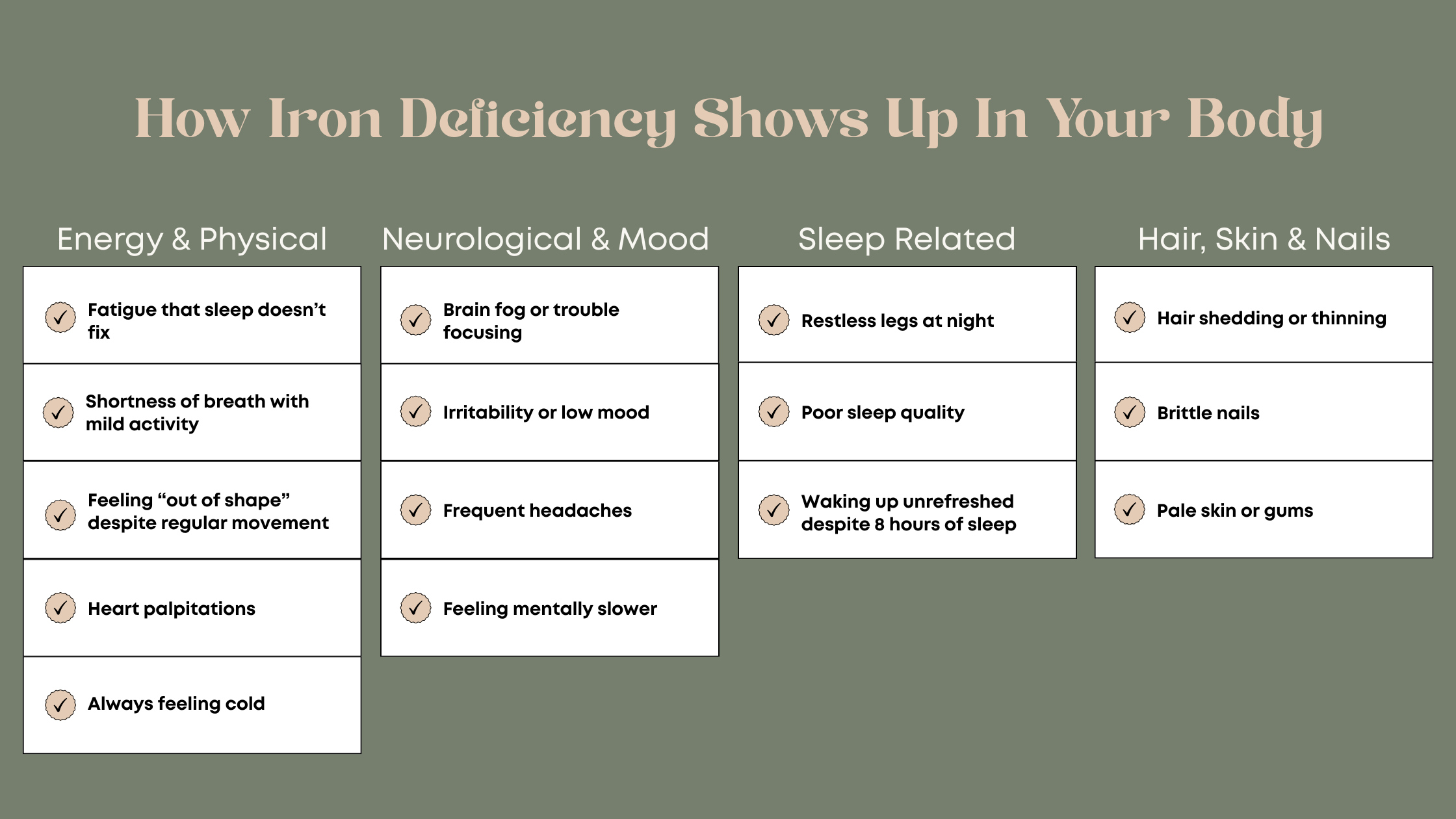
Here are some of the signs I see in practice all the time:
Energy & Physical Symptoms
Fatigue that sleep doesn’t fix
Shortness of breath with light activity
Feeling “out of shape” despite regular movement
Heart palpitations
Feeling cold all the time
Neurological & Mood Symptoms
Brain fog or trouble focusing
Irritability or low mood
Frequent headaches
Feeling mentally slower
Sleep-Related Symptoms
Restless legs at night
Poor quality sleep
Waking up unrefreshed even after 8 hours
Hair, Skin & Nails
Hair shedding or thinning
Brittle nails
Pale skin or gums
These symptoms are real, and they are not “just stress” or “just life.” If they’re showing up for you, it’s worth looking deeper — especially if you’ve never had your iron properly evaluated beyond a standard CBC.
Wait, Isn’t That Just Anemia?
Not quite.
Anemia is what happens when iron deficiency progresses to the point where you don’t have enough iron to build hemoglobin, the oxygen-carrying part of your red blood cells. But that’s the end of the road… the last stop, not the beginning.
Iron deficiency starts long before your hemoglobin drops. It begins when your ferritin (your stored iron) gets depleted. At this stage, your red blood cell counts might still look perfectly normal, but your brain, muscles, and nerves are already feeling the strain.
In fact, many studies show that women with iron deficiency ( but not anemia ) still experience fatigue, reduced exercise performance, and cognitive fog. And when we treat the deficiency, those symptoms often improve dramatically.
So Why Do So Many Women Have Low Iron?
The biggest culprit? Blood loss.
Heavy periods are the number one cause of iron deficiency in menstruating women. And unfortunately, they’re often brushed off as “normal.” I’ve seen so many women who plan their lives around their cycles, doubling up on pads, skipping social events, or calling in sick to work and still being told that it’s just how things are.
Add in the increased demand from pregnancy, the iron losses after delivery, the nutritional drain of breastfeeding, and the unpredictable bleeding of perimenopause, and it’s not surprising so many women fall into deficiency.
Even athletes can be affected. High-impact training, frequent sweating, and gut inflammation from exercise all increase iron losses. And even if you eat a nutrient-rich diet, absorption can still be impacted by things like low stomach acid, medications, or plant-based eating patterns.
This isn’t about personal failure. It’s about physiology — and the need for more proactive screening and support.
Why “Normal” Lab Results Don’t Mean Optimal…
Here’s where things get really frustrating: the reference ranges used in conventional testing are designed to catch disease, not optimize health. Most labs don’t flag low iron until ferritin drops below 10 or 15. But research shows symptoms can start when levels are under 50 and some studies suggest we need levels above 75 for brain function, mood stability, and restful sleep.
If you’ve been told your labs are fine, but you’re dealing with fatigue, hair loss, brain fog, or restless legs, don’t stop there. Ask for your full iron panel, including ferritin, and find a provider who understands the nuance.
What’s the Best Way to Replenish Iron?
Oral supplements are the most common starting point, but they’re not always the most effective especially if you’ve struggled with side effects like nausea or constipation. It can take months for oral iron to make a difference, and absorption is often unpredictable.
IV iron therapy is another option that bypasses the gut entirely and replenishes stores much more quickly. It’s especially helpful for those with absorption issues, heavy bleeding, or more severe deficiencies. In my practice, it can be a total game-changer for women who’ve been struggling for years.
No matter which route you choose, the goal is twofold: 1) Replenish what’s missing, and 2) Identify and address what caused the deficiency in the first place.
The Bottom Line
Iron deficiency is more than just tiredness. It impacts your mental clarity, your sleep, your hair, your workouts, and your mood. And if it’s being overlooked because your labs aren’t flagged, that doesn’t mean your experience isn’t valid.
You deserve answers. You deserve to feel well. And iron might be a missing piece of the puzzle.
Curious if low iron could be behind your symptoms? Let’s take a look together. Book your discovery call and get the clarity you’ve been looking for.
If you are in Kelowna and want to understand your treatment options, you can read more about IV iron infusions in Kelowna at Ivy Health Clinic.
More on Iron & Iron Infusions:
Frequently Asked Questions:
-
Yes. Iron deficiency exists on a spectrum, and symptoms often appear long before anemia develops. You can have low iron stores (low ferritin) with normal hemoglobin levels and still experience fatigue, brain fog, hair loss, and other symptoms.
-
Most labs flag ferritin below 10-15 μg/L as deficient, but research shows symptoms often appear when ferritin drops below 50-75 μg/L. The threshold for "low" depends on the symptom. Restless legs, for example, may improve with ferritin above 75 μg/L.
-
Iron levels are all about balance between what you take in and what you use or lose. Even with adequate dietary iron, absorption can be limited by factors like low stomach acid, certain medications, plant-based diets, or underlying digestive issues. Heavy menstrual bleeding, pregnancy, breastfeeding, and athletic training also increase iron demands beyond what diet alone can provide.
-
With oral iron, it typically takes several months to replenish stores, depending on the severity of deficiency and how well you tolerate and absorb the supplements. IV iron can replenish stores much faster (often within weeks) and may lead to quicker symptom improvement.
-
IV iron is a well-studied treatment for iron deficiency. Modern formulations have low rates of serious adverse reactions, and the procedure is typically well-tolerated. Your healthcare provider will review your medical history to ensure it's appropriate for you.
A note on language: Throughout this article, I use the term "women" when discussing iron deficiency in the context of menstruation, pregnancy, and reproductive health. I recognize that not all people who menstruate identify as women, and not all women menstruate. This information applies to anyone with these physiological experiences, regardless of gender identity.