Iron Infusions vs. Iron Supplements: Which Is Right for You?
Last updated: June 2026
If you've been told your iron is low, you've probably been handed a recommendation for iron pills and sent on your way. But here's what most people don't know: oral iron supplements aren't your only option. And depending on your situation, they might not even be the best option.

Iron infusions deliver iron directly into your bloodstream, bypassing the gut entirely. This generally means faster results, fewer side effects, and often just one treatment instead of months of daily pills.
Let's clear up the confusion and help you figure out which approach makes sense for you. Wondering when you should consider iron supplementation at all? The threshold might be lower than you think. Learn more about the subtle signs of iron deficiency
Understanding Oral Iron Supplements
Oral iron moves through your digestive system and gets absorbed in small amounts each day. Your body can only take in so much at once, which is why it takes months to see significant improvement.
If you do choose oral iron: Taking it every other day rather than daily is generally recommended. Research shows that every-other-day dosing reduces GI side effects while still effectively improving iron levels over time. In fact, studies have found that alternate-day dosing leads to 34% higher iron absorption compared to daily dosing, because daily iron raises hepcidin (a hormone that blocks iron absorption), while waiting 48 hours allows hepcidin to return to baseline.
Pros:
Accessible and inexpensive
Can be effective for mild deficiencies or prevention
No need for a medical appointment
Cons:
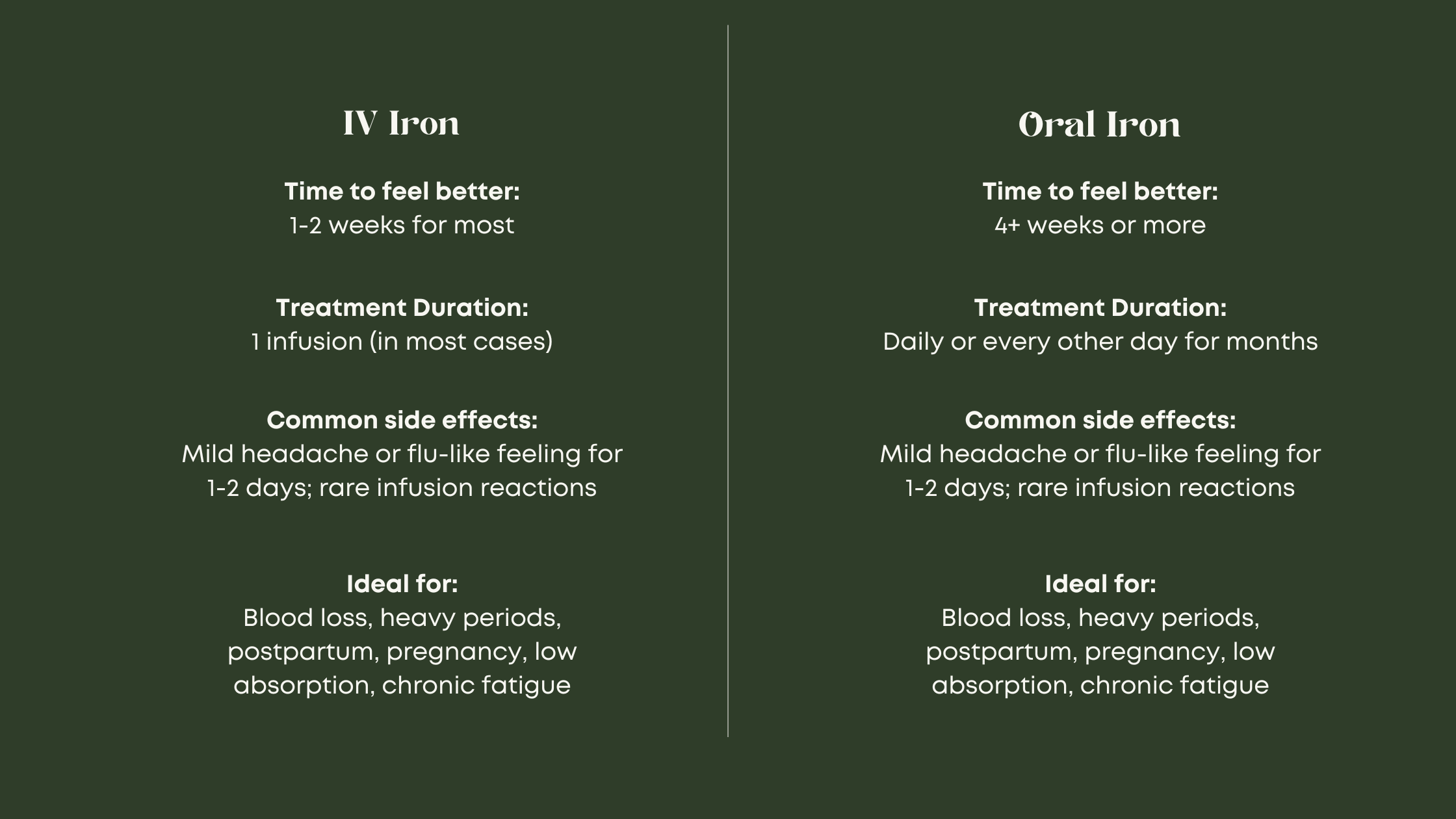
Slow improvement: It usually takes 4+ weeks (often closer to 6+ weeks) to start feeling better, and you'll need to take iron daily or every other day for several months, even after your hemoglobin normalizes, to rebuild your ferritin stores.
Common side effects: Nausea, metallic taste, constipation, diarrhea, and stomach discomfort are extremely common. These side effects are dose-dependent, which is why many people stop taking their iron before they've actually fixed the problem.
Low absorption: Your gut can only absorb a fraction of the iron in each pill, and certain foods, drinks (like coffee or tea), and medications can interfere with absorption even further.
Best for:
People with mildly low ferritin who can tolerate oral iron
Prevention or maintenance after iron levels have been restored
Situations where an infusion isn't accessible or necessary
Understanding Iron Infusions
IV iron delivers a large dose of iron directly into your bloodstream in one visit (or sometimes a few, depending on how much you need). It skips the gut entirely, which means better absorption and far fewer digestive side effects.
Pros:
Fast improvement: Many people start to feel more energy within 1-2 weeks as new red blood cells are produced.
High absorption: IV iron delivers nearly 100% of the dose directly into your bloodstream. No guessing about whether you're actually absorbing it.
Fewer side effects: Because the iron bypasses your digestive system, you avoid the nausea, constipation, and stomach discomfort that come with oral iron. Some people may experience mild side effects during or shortly after the infusion (like headache or a flu-like feeling), but these are typically short-lived.
Short treatment duration: Most people only need one infusion. In some cases, a second dose may be recommended, but you're not looking at months of daily pills.
Cons:
Requires a medical appointment: You'll need to book a consultation and come in for the infusion itself, which typically takes about 30-60 minutes.
Possible mild reactions: Some people experience a mild headache or flu-like feeling for 1-2 days after the infusion. Serious infusion reactions are rare, especially with modern iron formulations, which are much safer than older versions.
Best for:
People with ongoing blood loss (like heavy periods)
Postpartum or pregnancy-related iron deficiency
Low ferritin with significant symptoms (fatigue, brain fog, breathlessness)
Anyone who can't tolerate oral iron or hasn't improved with supplements
People with absorption issues (like celiac disease, IBD, or gastric bypass)
Good to know: If your ferritin is below 50 μg/L, you're likely a good candidate for an iron infusion, even if your hemoglobin looks "normal." The medical system typically reserves infusions for severe anemia due to access issues, but many women would benefit from being offered it sooner, before they spend months struggling with symptoms and side effects from oral iron. You don't need to be anemic to deserve treatment that actually works.Book your iron infusion consult here or learn more about our iron infusion services.
Comparing Your Options: Which Is Right for You?
Here's a quick look at how the two approaches stack up:
Making the Right Choice for You
So which option is right for you? Here's the bottom line:
Choose oral iron if: Your iron is only mildly low, you can tolerate the side effects, and you're okay with a slower timeline. Remember to take it every other day for better absorption and fewer side effects.
Choose an iron infusion if: Your ferritin is below 50 μg/L, you're dealing with significant symptoms, you can't tolerate oral iron, or you need faster results. You don't need to be anemic to qualify.
Either way, make sure you're working with a provider who's addressing the root cause, not just handing you a quick fix.
What About Getting Iron from Food?
You should absolutely try to get as much iron as possible from your diet. Red meat, poultry, fish, beans, lentils, and dark leafy greens are all good sources. But here's the reality: even with an iron-rich diet, it's very challenging to correct a true deficiency through food alone, especially if you're dealing with heavy periods, pregnancy, or absorption issues. Food is important for maintenance, but it's rarely enough to fix low iron.
No Matter How You Get Your Iron, You Need to Address the Root Cause
Whether you choose oral iron or an IV infusion, it's critical to figure out why your iron is low in the first place.
If you're losing iron faster than you're replacing it (through heavy periods, internal bleeding, or poor absorption), you'll end up stuck in a cycle of needing to replete your levels over and over again.
Treatment should always include two parts: replenishing your iron stores AND addressing the underlying cause. Otherwise, you're just putting a temporary patch on a bigger problem.
Ready to Restore Your Energy?
You've been told it's 'just stress.' You've spent months on iron pills that aren't working. You're still exhausted.
You deserve better.
At Ivy Health Clinic, we assess your full picture: ferritin levels, symptoms, lifestyle. We offer solutions that actually work, including iron infusions before you're severely anemic, because you shouldn't have to suffer for months to qualify for effective treatment.
Book your iron infusion consult here or learn more about our iron infusion services.
Let's get your iron back on track and get you feeling like yourself again.
More on Iron & Iron Infusions:

Frequently Asked Questions:
-
It depends on your situation. If your ferritin is below 50 μg/L, you're dealing with significant symptoms, or you haven't been able to tolerate oral iron, an infusion is often the better choice. If your iron is only mildly low and you can handle the side effects of oral supplements, that might be enough.
-
Oral iron is absorbed slowly through your digestive system, which limits how much your body can take in at once and often causes GI side effects. IV iron is delivered directly into your bloodstream, which means faster results, better absorption, and fewer digestive issues.
-
No. Anemia is a late sign of iron deficiency. If your ferritin is below 50 μg/L, you can benefit from an infusion even if your hemoglobin is normal.
-
The infusion itself typically takes 30-60 minutes. You'll stay for a short observation period afterward, so plan for about 1-2 hours total.
-
Most people only need one. Depending on how low your iron is and what's causing the deficiency, a second dose may be recommended.
-
Stoffel NU, Cercamondi CI, Brittenham G, et al. Iron absorption from oral iron supplements given on consecutive versus alternate days and as single morning doses versus twice-daily split dosing in iron-depleted women: two open-label, randomized controlled trials. Lancet Haematol. 2017;4(11):e524-e533.
This blog is for educational and informational purposes only and is not intended as medical advice. It should not be used to diagnose or treat any health condition. Always consult with a qualified healthcare provider before starting any new treatment, including iron supplementation or iron infusions, to determine what's appropriate for your individual situation.